Practical guideSeasonal guideCinque TerreAutumn 2026Updated 16 min read
Cinque Terre in Autumn: Is September, October or November Best?
Autumn here isn't one season — it's three different trips. The later you go, the fewer people you share the villages with, and the more weather risk, closures and reduced services you accept in exchange. This is the honest month-by-month version.
The terraces above Corniglia in harvest season — the one thing autumn gives you that a summer visit never will.
CT
Cinque Terre from Florence — editorial team
Compiled from the Cinque Terre National Park (parconazionale5terre.it), Regione Liguria / ARPAL alert records, Consorzio Marittimo and Trenitalia 2026 timetables, long-run climate datasets, and GetYourGuide partner data. Updated September 2026.
Autumn is routinely sold as the perfect shoulder season for the Cinque Terre: fewer tourists, pleasant temperatures, lower prices. That description hides a problem — September, October and November bear surprisingly little resemblance to one another. September is summer in all but name. October is the statistically wettest month of the year, and still busy. November is when the off-season genuinely begins, along with the closures. So the useful question isn't "is autumn good?" It's which version of autumn do you want?
Check live availability and prices for this Cinque Terre & Pisa day trip on GetYourGuide. Pоwered by GetYourGuide.
The short answer
September and the first half of October are among the best weeks of the year to visit the Cinque Terre — warm, active, with swimming and the grape harvest both still on — provided you accept crowds and near-peak prices. Late October is a gamble worth taking only if your itinerary has slack in it. November suits hardy walkers, photographers and off-season romantics, and is a poor choice for beach travellers, families locked to fixed dates, or anyone without a weather contingency.
Strip away the shoulder-season marketing and one rule governs the whole season: the later you go, the fewer people you get — and the more weather risk, closures and reduced services you accept.
You cannot have both empty villages and reliable sunshine. The month with the fewest visitors, November, is also the second-wettest and the most disrupted. The month with the most dependable weather, September, still delivers summer-level crowds and summer-level prices. October sits in between and is genuinely two different months depending on which half you book: the first two weeks still feel like an extension of September, while the last week can hand you shut trails, cancelled boats and darkness by five o'clock.
That framing — early versus late autumn, not "autumn" — is the single most decision-relevant thing to hold on to. Everything below is organised around it.
Worth booking before the season closes
Autumn experiences on the Ligurian coast
Some Cinque Terre experiences are strictly seasonal. Boat rides between Manarola, Vernazza and Monterosso, kayak trips and sunset cruises out of La Spezia and Portovenere all wind down with the ferry season in late October or early November — while vineyard walks, wine tastings and guided day trips from Florence and Pisa keep running and cope far better with a wet forecast. The options below cover both.
September — summer in all but name
If you arrive in the Cinque Terre in September expecting a peaceful shoulder season, you will be disappointed. If you arrive expecting most of what people come here for in summer, minus the worst of the heat, you will have a very good trip.
The numbers back it up. Daytime highs sit at roughly 24–25°C, nights at 15–17°C, and the sea is at 23–24°C — within a degree of its August peak, because the water lags the air by a couple of months. Rainfall is moderate at around 70 mm across 6–7 days (The Weather Guide), arriving as sporadic showers and thunderstorms rather than sustained rain, and the coast stays considerably warmer than the rest of Italy well into the month.
Everything is still running: the full ferry timetable through late September, the Cinque Terre Express at summer frequency, boat tours, kayak hire, beach establishments, and every restaurant in all five villages. The Blue Trail is far more pleasant than in July or August, when the exposed coastal sections are brutally hot.
And September adds one thing summer cannot: the vendemmia, the grape harvest on the terraces, which runs from September into early October. See harvest and wine below.
The catch is crowds and price. September crowds thin only slightly after the first week, dinner still needs a reservation, and accommodation still commands near-peak rates. September is one of the best months to visit the Cinque Terre — but not because it is quiet.
Best September week: the second and third weeks. The first week still carries August's tail, and by the last week the sea has begun to cool and the ferry timetable steps down. Mid-week beats the weekend by a wide margin in any autumn month.
October — the interesting compromise, and the gamble
October is the month most travellers get wrong. The assumption is that it is the quiet, golden, half-price month. In reality it is the statistically wettest month of the year and the peak of Liguria's flash-flood and landslide season — while still being genuinely crowded.
Cruise calls at La Spezia, coach groups and Cinque Terre Card sales all continue at near-peak levels right up to the moment the paid season ends around 1–2 November 2026. Visitors consistently report the villages busy from about 10:00 to 16:00 or 17:00. Do not plan an October trip around the promise of solitude.
What you do get is a month that still has everything open, with temperatures that fall from about 21°C at the start to 18°C by the end, a sea still around 21°C, superb low-angle light, and clear air now that the summer haze has gone. The first half of October is, for many people, the best fortnight of the entire autumn.
The gamble is the second half. Rainfall is heavy rather than drizzly, cloud cover climbs from roughly 42% to 49% across the month (Weather Spark), the clocks go back on 25 October 2026, and trail closures under weather alerts become routine rather than rare. An October trip needs slack in it.
If you book October, book flexibly. Refundable accommodation, at least one indoor or inland fallback day — La Spezia, Genoa, Portovenere — and a daily check of the regional weather alert. The train is the all-weather backbone and usually the first thing to resume when something goes wrong.
November — the real off-season
November is when the Cinque Terre genuinely empties. After the All Saints weekend on 1 November, the villages quieten markedly and, as residents put it, the locals reclaim their streets. American and cruise-passenger traffic, which tails off through October, falls away almost entirely.
Highs run at about 15°C, sliding from 17°C at the start of the month to 12°C at the end, with nights around 11°C. It is the second-wettest month at roughly 130–204 mm over about 13 rain days, and the rain comes in heavy spells rather than steady drizzle.
Here is what stops. Ferries end with the season on about 1 November. The Cinque Terre Express ends, and trains drop to winter frequency, about one an hour at the smaller villages instead of every 15 to 20 minutes, from 2 November. Boat tours, kayaking and sunset cruises finish with the ferries. Beach establishments in Monterosso and Vernazza have already wound down and the umbrella setup on Monterosso's beach is dismantled, leaving open shingle and sand. Many seasonal hotels and B&Bs shut from early to mid-November, and restaurants progressively close for the season.
Here is what remains. Trains still connect all five villages. The trails are free from 2 November, no card required except for the Via dell'Amore — though they are entirely weather-dependent. In deep off-season, at least one restaurant or bar stays open in every village, with more choice in Monterosso, where four or more places typically keep going on a rota, Ristorante Belvedere among them. And this is when the landscape finally turns: vines and some trees colour up towards late November.
One honest caveat about that last point. This is a Mediterranean coastal landscape, not a New England autumn. There is no dramatic mass leaf-turn in September or October — the terraces stay green well into the season. What genuinely changes is the harvest activity on the hillsides, the softer light, the clearer air and the deeper sea colour.
Autumn weather, month by month
Figures vary by source and reference period, so treat these as ranges rather than promises. The longest-running dataset here is weather-and-climate.com, which uses 49 years of records (1976–2025) and puts the annual average at 1,405 mm.
Month
Daytime high
Night
Sea
Rainfall
Rain days
September ★
24–25°C / 75–77°F
15–17°C / 59–63°F
23–24°C / 73–75°F
~70 mm
6–7
October
21°C → 18°C / 70–64°F
12–15°C / 54–59°F
~21°C / 70°F
140–206 mm (wettest)
~11
November
17°C → 12°C / 63–54°F
~11°C / 52°F
cooling from ~20°C
130–204 mm
~13
July (for comparison)
28°C / 82°F
19°C / 66°F
~23–24°C
25–39 mm (driest)
~3
Put that last row next to the first three and the scale of the shift is obvious: October and November are roughly four to eight times wetter than mid-summer. Humidity, at least, stays moderate at 65–75% year-round thanks to the sea breeze.
The conflict in the October figure is worth knowing about. The 49-year dataset records 206 mm (8.1 in) over 11 rainy days; theweather.guide and holiday-weather give a lower 140–150 mm. We quote the range rather than pick a winner. What every source agrees on is the shape of the year: July driest, October and November wettest, and downpours rather than drizzle.
Flood risk and the allerta system — the part most guides skip
This is the section that separates an honest autumn guide from a lazy one. Autumn is precisely when Liguria's most dangerous rainfall occurs, and the Cinque Terre's steep, terraced hillsides funnel water fast.
25 October 2011
After a dry summer, a stalled storm hit the coast. Rick Steves' blog reports that "within four hours, the region got 22 inches of rain — a third of an average year's total"; the Save Vernazza campaign records that the storm "ravaged the territory with a tornado and 542 mm (21 inches) of rain, a third of an average year's rainfall." Monterosso and Vernazza were buried under up to three metres of mud.
Rellini et al. of the Dipartimento di Scienze della Terra at the University of Genoa, writing in the Journal of Maps (received 13 November 2012, published 19 March 2013), record it plainly: "On 25 October 2011, heavy rainfall affected an area of ca. 1000 km² between eastern Liguria and northern Tuscany… The event caused floods, hundreds of shallow landslides, four casualties and severe structural and economic damage in Monterosso and Vernazza." That peer-reviewed count covers the coastal catchments studied; contemporary press reports put the toll across the wider Spezzino and Lunigiana disaster at up to 13, three of them in Vernazza. Damage ran into hundreds of millions of euros, and sections of the coastal path were destroyed outright.
It is a seasonal hazard, not a freak
A national state of emergency was declared for events of 23 October to 6 November 2023 covering the province of La Spezia and the Metropolitan City of Genoa (Council of Ministers, 11 March 2024; Protezione Civile Ocdpc n.1082 of 28 March 2024). Orange alerts hit Liguria repeatedly in October 2024, on 7–8 and again on 16–18 October. Other documented orange events include 26–27 October 2023, and 22 September and 22 October 2025. Most pass without a 2011-scale catastrophe — but trail closures and card-sale suspensions on wet days are routine, not rare.
What the alert colours actually mean for your day
Regione Liguria and ARPAL publish a colour-coded system — green, yellow (giallo), orange (arancione), red (rossa) — at allertaliguria.regione.liguria.it. The National Park has a formal, binding protocol tied to those levels:
Yellow: sales of the Trekking Cinque Terre Card are suspended at every outlet and online, and hikers are advised not to use the trails — "Si invita a non percorrere i sentieri."
Orange: from the park's own notice of 8 October 2024 — "Con ALLERTA ARANCIONE Interdizione all'accesso di tutta la rete sentieristica e sospensione della vendita di tutte le tipologie di Carte Servizio Cinque Terre Card (Treno e Trekking) presso tutti i punti vendita ed in modalità on-line." In plain English: the entire trail network is closed and all card sales stop, train cards included.
Red: the same closures as orange, plus mayoral ordinances (ordinanze sindacali) that can bar access to the villages themselves.
Refunds apply to Treno MS and multiservice cards in the event of an orange or red alert.
One detail that catches people out: trails can stay shut after the alert has lifted. Park-appointed geologists must inspect the paths once ARPAL cancels the alert before they reopen — Corniglia–Vernazza and Vernazza–Monterosso were both kept closed after the orange alert of 20 August 2025.
The railway is affected too. During the October 2024 orange spell, circulation between La Spezia and Corniglia was slowed by a violent downpour (Primocanale), and the wider Genoa–La Spezia line saw delays of up to 80 minutes plus limitations and cancellations (Fanpage). The line is chronically vulnerable to heavy rain — tunnel flooding near Biassa suspended it in March 2013, with replacement buses.
The one rule that changes your plan: any orange or red alert means the trails and card sales are shut by regulation, not by judgement. Check allertaliguria.regione.liguria.it and the park's channels each morning, never start a trail under yellow or worse, build at least one flexible day into any October or November itinerary, and keep the train as your fallback — it usually resumes fastest.
Most reviewed · Free cancellation
Florence: Cinque Terre Day Trip — the flexible way to do autumn
Autumn's whole problem is uncertainty, and free cancellation up to 24 hours before is the cleanest answer to it: book a date now, watch the forecast, move it if an alert lands. The guide adjusts the village order around crowds and trail closures on the day — which matters far more in October than in June.
Optional guided cliff hike or Pisa swap at booking
Autumn timing tip: a Tuesday to Thursday departure in late September or the first half of October gives you the thinnest crowds of the season while the boat leg is still running. Same price, noticeably fewer people.
Book directly on GetYourGuide — instant confirmation, free cancellation up to 24 hours before.
Is autumn good or bad for hiking here? Both. September and dry October days are arguably better than high summer, when the coastal path is brutally hot and exposed and the light is flat. But after rain the stone-and-gravel mule tracks turn slippery and are frequently closed, and the shortening day squeezes the walking window from both ends.
Official status for the 2026 season, per the park and consortium (cinqueterre.eu.com, last updated 27 May 2026):
Monterosso–Vernazza (592-4): open, paid with the Cinque Terre Card. About 3.5 km, 2 hours, moderate, with steep steps.
Vernazza–Corniglia (592-3): open, paid. About 4 km, 1.5 hours, moderate.
Manarola–Corniglia (592-2, the low coastal path):closed by landslide and not expected to reopen before roughly 2028–2029 — season-independent. The alternative is the Manarola–Volastra–Corniglia high path through the vineyards: free, harder, about 2.5 hours, with a bus available for the Manarola–Volastra leg.
Via dell'Amore (Riomaggiore–Manarola): open, having reopened in summer 2024 after 12 years. One-way from Riomaggiore to Manarola, timed entry capped at 400 people per hour — 200 entries every 30 minutes, with a maximum crossing time of 30 minutes for the 900 m path, pre-booked online. Included in the Trekking and Treno cards in 2026.
The weather-resilient alternatives are the free high routes: the Sanctuaries trails, the Monterosso–Vernazza high route via Soviore and Reggio (508 + 582 + 591 + 509), the Sentiero Rosso / AV5T ridge, and Riomaggiore–Portovenere (593 + 598). They sit above the coastal path, they are quieter, and they are often the better call on a marginal day — though they are still subject to the same alert closures.
One rule that applies in every season: open or smooth-soled footwear is banned on the paid trails. Flip-flops will get you turned back, and fines apply. Full detail in our Cinque Terre hiking guide.
The high paths through the terraces stay open when the coastal route doesn't — and in autumn they carry a fraction of the traffic.
The Cinque Terre Card in autumn
There are two cards. The Trekking Card covers the paid trails plus park buses, €10 a day on standard days rising to €15 on high-demand days. The Treno MS Card adds unlimited Cinque Terre Express travel between Levanto and La Spezia, from €22 up to €35 on peak days, and €17.30 from 2 November to 31 December 2026. Multi-day, family, child and senior rates exist.
Pricing is dynamic across A/B/C bands — green, yellow, red. The good news for autumn travellers: in 2026, as in 2025, most of October's weekdays fall in the cheapest green band, so this is a relatively cheap time to buy.
The season matters more than the price. The paid-trail season runs 14 March to 1 November 2026, and from 2 November the trails are free and no card is needed, except for the Via dell'Amore. A discounted winter train card exists but is often not worth it against single tickets.
So: worth buying in September and October if you plan to walk a paid section and use the train twice in the same day. Much less compelling in November, once the trails cost nothing and you may only need the occasional single ticket. Our trains and Card guide works through the arithmetic.
Ferries, trains and the 1 November cut-off
The single hardest date in the autumn calendar is the end of the transport season around 1–2 November 2026. Almost everything seasonal ends in that same window.
Ferries
~28 March to 1 November 2026
Run by the Consorzio Marittimo 5 Terre Golfo dei Poeti. Frequency and route length step down through late September and again in late October — the main summer timetable ran 20 April to 27 September 2026. Boats never call at Corniglia, which has no harbour. A one-day Levanto–Cinque Terre–Portovenere–La Spezia hop-on-hop-off pass is about €42 for an adult. After roughly 1 November there is effectively no scheduled village ferry.
Cinque Terre Express
Every 15–20 min to 1 November, then winter frequency
The high-frequency shuttle runs 14 March to 1 November 2026, roughly 05:00–05:30 through to 23:30. From 2 November it drops to about one train an hour at the smaller villages, though regional trains link the villages through the winter, apart from four weekends of rail works south of Corniglia (see our winter transport guide). This is the all-weather backbone of any autumn trip and your fallback when ferries or trails are cut.
Sea state
Autumn cancellations are common
Ferry sailings are cancelled at short notice for rough seas far more often in autumn than in summer. The consortium publishes a daily update from 8am — check it before you build a day around a boat. The mareggiate, storm swells, pick up from October.
Cars
Still a bad idea, in any season
The villages are effectively car-hostile: tiny ZTL-restricted centres and almost no parking. Park at La Spezia or Levanto and take the train, whatever the month. Riomaggiore and Manarola have steep internal access on top of that.
How crowded is each autumn month, really?
Start with the scale of the problem. The park records roughly 3.5 million visitors a year, and the MIC-HUB study "Cinque Terre Park. Preliminary Study of Tourist Flows and Design Hypotheses," commissioned by the park and reported by Finestre sull'Arte, found that by 2023, four million tourists were concentrated on an area of just 1 square kilometre. Visitors are funnelled into 2–3% of the park's territory. Ferry passengers alone number about 450,000 a year.
Cruise passengers are a smaller share than their reputation suggests — about 300,000 of roughly 3,500,000 annual visitors, under 10% (Arbaspaa, citing the National Park and the Autorità di gestione degli sbarchi) — but they cluster tightly, and October still sees cruise-driven day-tripper crowds concentrated between about 10:00 and 16:00 or 17:00. November calls dwindle. Independent travellers, not cruises or coach groups, are the majority in every month.
Month by month:
September: crowds thin only slightly after the first week. Still busy, still needs dinner reservations.
October: genuinely busy through the middle of the day until the season closes. Do not expect solitude.
November: the real drop-off, and it arrives sharply after the All Saints weekend on 1 November.
The avoidance toolkit is the same in autumn as in summer, and it works better: be in the first village before about 10am or come back after 4–5pm, stay overnight if you can, choose weekdays over weekends, and walk uphill — day-trippers rarely leave the coastal path.
"Well organised tour. Due to off season we got to see Cinque Terre without the crowds. Ado from Walkabout-Tours did a great job — very informative, approachable and funny."Danijela · Switzerland · 5★ · Dec 21, 2025 · Verified GetYourGuide traveller
Prices, availability and what actually closes
Rates peak at Easter and from June through September, and September still commands near-peak prices — this is the part of the "cheap shoulder season" story that doesn't survive contact with a booking page. October eases. November is one of the cheapest months of the year; both Hotels.com and Expedia flag January–February and November as the lowest-price windows.
Availability loosens before prices do. From mid-October you can start booking closer to the date, and by November last-minute booking becomes genuinely feasible — against the four to six months' lead time summer demands (cinqueterre.eu.com). One operator's caution is worth repeating, though: Monterosso rates hold at roughly €120–200 from March to October with "price drops really rare." Expect easier availability more than dramatic discounts until November proper.
What closes, and when:
Beach establishments (bagni) in Monterosso — Bagni Eden, Bagni Alga — and Vernazza wind down after summer; Monterosso's umbrella setup is dismantled and the beach reverts to open shingle and sand.
Restaurants, focaccerie and gelaterie cut their hours through October and many close for the season from early November. In deep off-season at least one restaurant or bar stays open in every village, with four or more in Monterosso operating on a rota.
Boat-tour operators, kayak and snorkelling outfits, sunset cruises wind down with the ferry season in late October or early November.
Museums and sights, including Vernazza's Castello Doria, move to reduced seasonal hours in autumn — confirm locally, as they vary year to year.
Accommodation: winter closures begin after the All Saints weekend around 1 November, with many seasonal hotels and B&Bs shutting from early to mid-November. Our where to stay guide covers which bases stay open longest.
Mid-November, realistically: trains run on a reduced timetable, the villages are walkable and photogenic, a handful of eateries and a bar per village are open, the trails are free but weather-dependent, and the sea and ferry scene is over.
Swimming, sea temperature and storm swells
The sea lags the air by about two months, which is why September is the best swimming month of the autumn and, arguably, of the year. Water sits at 23–24°C in September and around 21°C in October, cooling through November.
The comfortable swimming season runs roughly June to early or mid-October. By late October the water is still swimmable for the hardy, but cooler air and shorter days make it unappealing. From October onwards the mareggiate — storm swells — become more frequent, driving ferry and boat-tour cancellations and closing exposed swimming spots.
Remember that Monterosso al Mare has the only proper sandy beach; elsewhere you are swimming off rocks and pebble coves. In autumn, with the beach establishments dismantled, Monterosso reverts to open shingle — pleasant on a warm September afternoon, bleak in November.
Daylight and the 25 October clock change
This is the most underrated variable in an autumn itinerary. Daylight Saving Time ends on Sunday 25 October 2026 at 03:00, and the evening light collapses overnight.
Early September: sunset around 19:50–20:00. Long, generous evenings. The autumnal equinox falls on 23 September 2026.
Early October: sunset around 19:00.
24 October, the evening before the change: sunset around 18:15.
The morning after DST ends: sunset drops to roughly 17:10.
End of November: sunset around 16:50. The year's earliest sunset is 16:44, on 9 December.
The practical consequence: after 25 October, useful hiking and photography light ends by about 17:00. Front-load your walking into the morning, and note that ferry timetables — with last boats often around 18:00 — already assume short days. These times are approximate; confirm the exact figures for your dates before you build a tight plan around them.
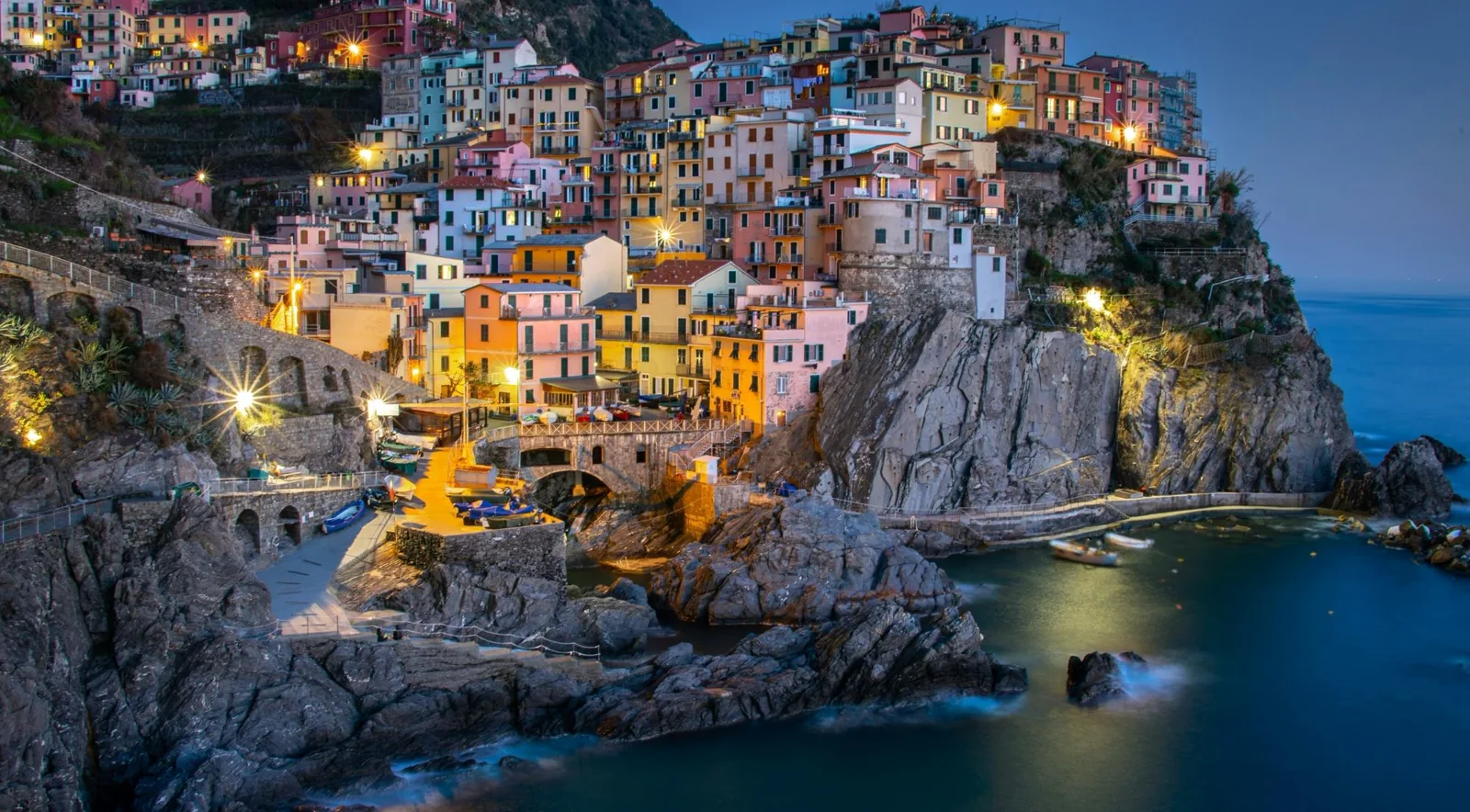
The upside of the early dark: blue hour arrives before dinner. In November you can photograph Manarola lit up and still be at a table by seven.
Harvest, wine and autumn food
The vendemmia — the grape harvest on the terraces — runs from September into early October, with official start and end dates set by Regione Liguria. It is the one genuinely seasonal spectacle of Cinque Terre autumn: activity on hillsides that are empty the rest of the year, the little monorail trains hauling crates down the slopes, and the smell of drying grapes drifting through the caruggi. Some producers welcome visitors.
The wines are worth understanding before you taste them. Cinque Terre DOC whites are blends of Bosco, Albarola and Vermentino. The prized bottle is Sciacchetrà, a passito dessert wine made from grapes dried for 70-plus days after harvest, with the Riserva aged three years. Production is tiny and estimates vary: ITALY Magazine reports "fewer than twenty producers of Sciacchetrà currently," while other sources cite somewhere between 21 and 30. The vineyard area tells the same story — down from around 1,600 hectares in the 1960s to roughly 100 hectares today.
The olive harvest follows, running roughly from late October into December. Inland and across eastern Liguria, chestnut and mushroom sagre fill the hill villages through September and October.
One expectation to correct: the Cinque Terre's headline village festivals are spring and summer events, not autumn ones. The Monterosso Lemon Festival falls on 16 May 2026 and the anchovy festivals run in June. Autumn is comparatively light on big dated village events, so plan around harvest and food rather than a festival calendar — and check the park events calendar and the Consorzio Turistico site for anything specific to your dates.
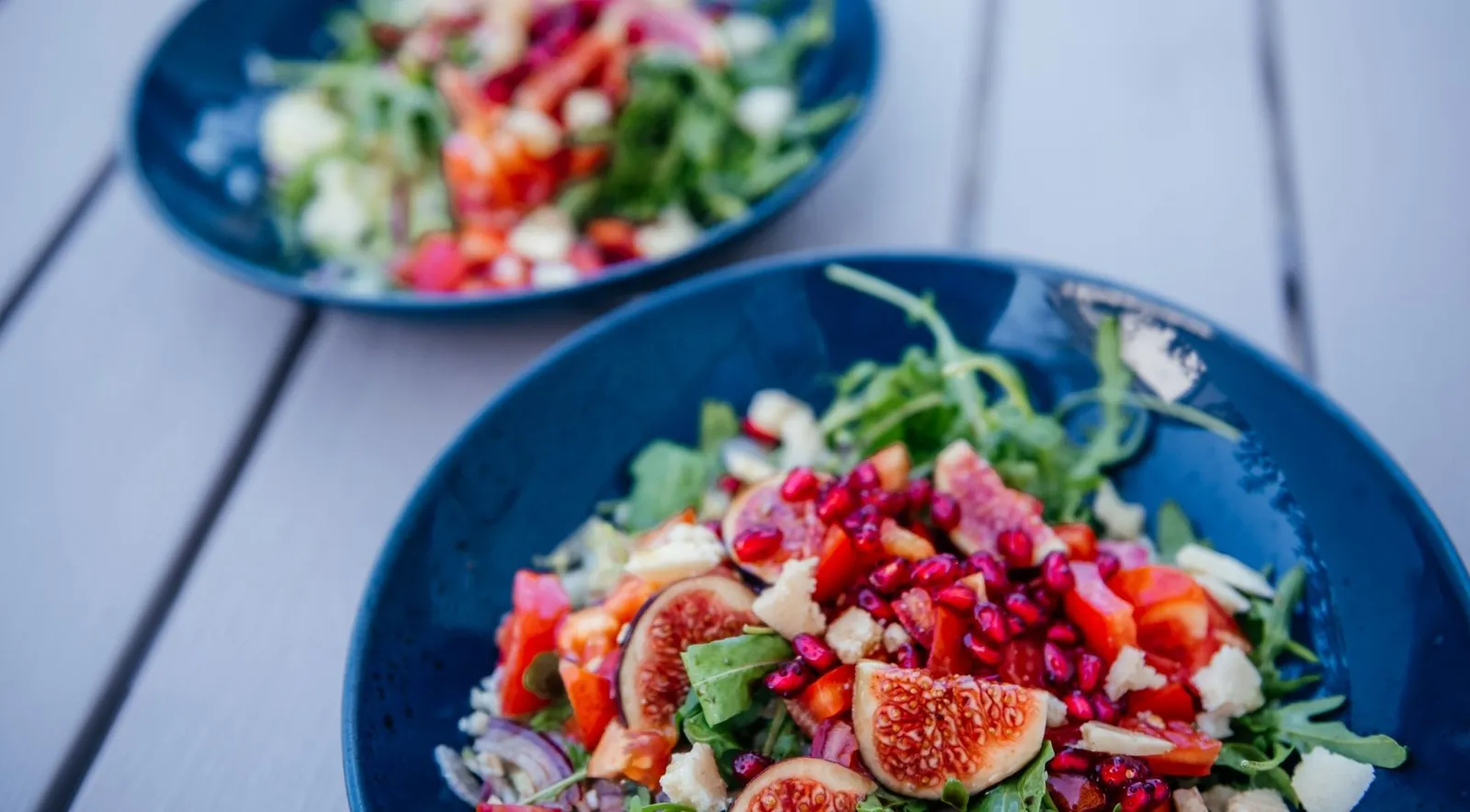
Harvest season on the table — freshly pressed local white, anchovies and focaccia, with the terraces still being worked above the village.
Which tours actually work in autumn — and which don't
Autumn splits the experience calendar cleanly in two. Some things get better as the season turns; others simply stop.
Better in autumn
Wine tastings and vineyard walks — especially during the vendemmia — olive-grove and oil tastings, pesto and cooking classes, and guided high-route hikes that would be punishing in July's heat. These are largely weather-resilient.
Still fully reliable
Day trips from Florence, Pisa, La Spezia and Genoa, and excursions to Portovenere and Palmaria. Coach and train logistics cope with rain in a way that boats and trails do not.
Book before mid-October
Sunset boat cruises, kayaking and snorkelling, and any itinerary with a swimming stop. Some scheduled Cinque Terre and Portovenere boat excursions run only to mid-October.
Gone by November
Anything that depends on the sea. The ferry season ends around 1 November and the boat-tour operators go with it. If a boat ride is central to your trip, that is a hard deadline.
Booking order for an autumn trip: lock the boat-based experiences first, because they have a cut-off date. Wine and harvest tours next, since September–October is prime and small producers fill up. The Via dell'Amore timed slot should be pre-booked in September and October. Everything else can wait. Full detail in our boat tours and ferries guide.
Who should visit in autumn — and who shouldn't
Good fit
Hikers — September through early October, when the trails are open, cool and dry more often than not
Photographers — soft low-angle light, clear post-summer air, harvest activity, and in November genuinely empty streets
Food and wine travellers — the vendemmia and then the olive harvest
Off-season and romantic travellers who want quiet above all else, in November
Budget travellers who can wait until November for the year's lowest rates
Poor fit
Beach-focused travellers after early October — the sea cools, the bagni close, the swells arrive
Families tied to fixed school-holiday dates with no slack for a weather day
Travellers with mobility limits — wet steep steps, reduced step-free ferry access, and short days compound each other
Anyone on a rigid one-shot itinerary with no contingency for an allerta closure
Anyone expecting a New England autumn — the leaf turn here is late and understated
What to pack, by month
All autumn
A proper waterproof shell, layers, and grippy hiking shoes with real tread — flip-flops and smooth soles are banned on the paid trails. A small daypack, water, and sun protection, because the September sun is still strong.
September
Still swimwear and summer clothing by day. A light layer for the evening, which now arrives earlier than you expect. Nothing heavier is needed.
October
Add a light insulating layer and a compact umbrella. Expect heavy downpours rather than showers, and pack on the assumption that one day of your trip will be wet.
November
Warmer layers plus a windproof and waterproof combination for the mareggiate and cold evenings — and a head-torch, given how early it gets dark after the clocks change.
Verdict: which autumn do you want?
Don't ask whether autumn is good. Pick your sub-period deliberately, then commit to its trade-offs.
Early to mid-September Warmth, swimming, harvest
Best for: first-time visitors, swimmers, food and wine travellers
You get the warmest sea of the year, the vendemmia on the terraces, every ferry and boat tour running, and hiking conditions far better than midsummer. You pay for it in crowds and near-peak rates. Book accommodation months ahead, reserve dinners, pre-book the Via dell'Amore slot and any wine tour, and buy your card online to skip the queues.
Late September to mid-October The sweet spot, with rain risk
Best for: hikers and photographers who can absorb one wet day
Services are still fully open, crowds are marginally thinner mid-week, the light is at its best and the card is in its cheapest band on most October weekdays. Come before the clocks change on 25 October and before the season closes. Accommodation is still worth booking ahead early in the month, and restaurants and tours still fill on cruise and weekend days.
Late October The gamble
Best for: flexible travellers only
The wettest fortnight of the year, coinciding with the collapse of evening light and the run-up to the season's end. Worth taking only with refundable bookings, an indoor fallback and a daily look at the alert bulletin. When it comes off it is superb; when it doesn't, you lose the trails and the boats on the same day.
November Quiet, cheap, closed
Best for: photographers, hardy walkers, off-season romantics
The villages empty after 1 November, prices fall to the year's lowest, and the trails become free. Ferries have gone, trains have thinned, many restaurants and hotels are shut, and outdoor plans live or die by the forecast. Advance booking largely stops mattering — though so does choice.
Whichever you pick, four things are worth re-checking in the week before you travel, because all of them change annually and some change daily: trail status, the ferry and train season-end dates, the card price band for your dates, and the allerta forecast.
The questions travellers most often ask when planning a Cinque Terre trip for September, October or November.
Is autumn a good time to visit Cinque Terre?
Early autumn is excellent; late autumn is a trade-off. September and the first half of October are among the best weeks of the year — warm, fully serviced, with the grape harvest on the terraces — provided you accept crowds and near-peak prices. Late October is a gamble worth taking only with a flexible itinerary. November is quiet, atmospheric and cheap, but ferries stop, trains thin out and many restaurants and hotels close.
Which is the best autumn month to visit Cinque Terre?
September, for most travellers. Daytime highs of about 24–25°C, a sea still at 23–24°C, every ferry and tour running, and the vendemmia under way. October suits travellers who want slightly thinner mid-week crowds and can absorb rain risk. November suits photographers, hardy walkers and budget travellers who do not need the sea or the boats.
Is October really the wettest month in Cinque Terre?
By the longest-running dataset, yes. weather-and-climate.com, using 49 years of records (1976–2025), puts October at 206 mm over 11 rainy days — the wettest month of the year against an annual average of 1,405 mm, with July the driest at 39 mm. Other datasets give a lower figure of roughly 140–150 mm. Either way, October is several times wetter than midsummer, and the rain arrives as heavy downpours rather than drizzle.
Can you still swim in Cinque Terre in September and October?
Yes in September, when the sea holds at about 23–24°C, within a degree of its August peak. October is around 21°C and still swimmable, but cooler air and shorter days make it less appealing after the first half of the month. Storm swells, the mareggiate, become more frequent from October and close exposed swimming spots.
Do the ferries run in Cinque Terre in November?
No. The Consorzio Marittimo season runs roughly 28 March to 1 November 2026, and after that there is effectively no scheduled village ferry until spring. Boat tours, kayaking and sunset cruises wind down at the same time. Even in October, sailings are cancelled at short notice for sea state — check the daily update from 8am.
Do you need a Cinque Terre Card in November?
Usually not. The paid-trail season runs to 1 November 2026; from 2 November the trails are free and no card is needed, except for the Via dell'Amore. A discounted winter train card exists but is often not worth it against single tickets, especially once the Cinque Terre Express drops to winter frequency.
What happens to the trails when there is a weather alert?
Regione Liguria and ARPAL run a colour-coded alert system: green, yellow, orange, red. On yellow, Trekking Card sales are suspended and hikers are advised off the paths. On orange, the entire trail network is closed and all card sales stop. On red, mayoral ordinances can bar access to the villages themselves. Trails can also stay shut after an alert lifts, because park geologists must inspect them before they reopen.
Is Cinque Terre crowded in October?
Yes, more than most people expect. Cruise calls at La Spezia, tour groups and card sales continue at near-peak levels until the season closes around 1–2 November. Visitors report the villages busy from about 10:00 to 16:00 or 17:00. The genuine drop-off comes after the All Saints weekend on 1 November, not in October.
Autumn day trips from Florence — free cancellation on all three
All three run through the autumn season and offer free cancellation up to 24 hours before, which is exactly what an October forecast calls for. Train pass and park entry included. Note that the boat legs are weather-dependent and wind down with the ferry season around 1 November.
Best wet-weather insurance
From Florence: Cinque Terre & Pisa Day Trip
$104·4.7★ (3,367 reviews) ·12.5 hours·Likely to sell out
Three Cinque Terre villages plus free time at the Leaning Tower. The Pisa half is the useful bit in autumn: if the coast is under an alert, the day still has a second act that doesn't depend on trails or boats.
Round-trip air-conditioned coach from Florence
Expert English-speaking local guide for the day
Cinque Terre Card + National Park entry included
Free time at the Leaning Tower of Pisa
Free cancellation up to 24 hours before. Instant confirmation on GetYourGuide.
All five villages by coach, train and boat, with the option to add a Ligurian street food lunch. This is the pick for September and October, when the vendemmia is on and the local white is freshly pressed.
Air-conditioned coach with onboard Wi-Fi
Boat cruise + Cinque Terre Express train between villages
Optional Ligurian street food lunch add-on
Free time in all five villages
Free cancellation up to 24 hours before. Instant confirmation on GetYourGuide.
From Florence: Cinque Terre Day Trip with Pisa & Boat Ride
$180·4.7★ (128 reviews) ·12 hours·Small group
Sail from Manarola to Vernazza along the coast, with a light vineyard hike beforehand and an afternoon stop at Pisa. The boat leg is the seasonal part — best done while the ferry season is still running, so September through October rather than November.
Round-trip coach, minibus or minivan from Florence
Manarola visit + light hike through the seaside vineyards
Scenic boat ride to Vernazza (weather permitting; train/minivan backup)
Afternoon stop at Pisa's Leaning Tower
Free cancellation up to 24 hours before. Instant confirmation on GetYourGuide.
The most-reviewed day trip from Florence visits all five Cinque Terre villages and includes the train pass, park entry and coastal boat ride. Free cancellation up to 24 hours before is what makes an autumn booking safe — lock in a date today and change it if the forecast or an alert says otherwise.
All five villages — Manarola, Corniglia, Vernazza, Monterosso, Riomaggiore
From $65 per person including park entry and train pass